
Psychiatric care for people too often misunderstood, dismissed, or reduced to symptoms.
Grounded in compassion. Rooted in social justice.
Well Rooted Psychiatry offers psychiatric evaluation, medication management, ADHD and autism diagnostic consultation for adults navigating identity, neurodivergence, trauma, substance use, and systems that have not always felt safe or supportive.
Why Well Rooted?
Many people arrive at psychiatric care after years of feeling misunderstood, over-pathologized, dismissed, or asked to separate their mental health from the realities of identity, trauma, neurodivergence, substance use, relationships, and survival.
Well Rooted Psychiatry was created to offer something different: thoughtful psychiatric care that can hold complexity without rushing to simplify it.
-
Many people come to care after feeling dismissed, over-pathologized, rushed, or reduced to a diagnosis that never fully fit. Here, we take time to understand the fuller story — your history, identity, nervous system, relationships, coping strategies, and what has or has not felt helpful in past care.
-
Psychiatric diagnoses can be helpful, but they can also feel incomplete, confusing, or misapplied. We revisit the clinical picture with care, considering how trauma, ADHD, autism, substance use, mood, anxiety, stress, and life experience may overlap.
-
Sensory overwhelm, executive functioning challenges, shutdown, burnout, emotional intensity, perfectionism, people-pleasing, or social exhaustion may reflect long-standing patterns of adaptation and survival. Care here is designed to hold that complexity without asking you to become easier to explain.
-
Medication decisions deserve thoughtful discussion and individualized care. We review options clearly and collaboratively, including benefits, risks, side effects, sensitivities, past experiences, and your goals for treatment. Appointments are structured and focused while still allowing space for meaningful conversation and shared decision-making.

You should not have to become smaller, simpler, or easier to understand in order to receive good care.
Here, care is collaborative, affirming, and clinically grounded. We work together to understand what has helped you survive, what may no longer be working, and what kind of support may help you feel more steady, connected, and able to move forward.
Help finding your footing when things feel unsteady.

Complex Mood, Anxiety & Trauma-Related Concerns
Care for adults navigating depression, anxiety, burnout, mood instability, trauma responses, dissociation, chronic overwhelm, or diagnostic uncertainty.

Neurodivergence & Diagnostic Complexity
Support for adults exploring ADHD, autism, masking, sensory overwhelm, executive functioning, burnout, or patterns that have been misunderstood or misdiagnosed..

Substance Use & Recovery-Informed Care
Nonjudgmental psychiatric care for people navigating substance use, recovery, harm reduction, relapse risk, shame, trauma, or co-occurring mental health concerns.
Areas of Focus
Support where you need it.
We address real-life challenges—anxiety, stress, relationships, and life transitions—with compassionate expertise and a commitment to supporting your growth.
Depression & Burnout
Care for low mood, shutdown, emotional numbness, loss of motivation, and the deep fatigue that can come from prolonged stress or survival mode
Trauma & Complex Stress
Psychiatric care that recognizes how trauma, attachment, environment, and chronic stress can shape symptoms, coping, relationships, and identity.
Anxiety & Overwhelm
Support for nervous system activation, rumination, panic, masking, perfectionism, and the exhaustion of constantly holding things together.
Substance Use-Informed Care
Nonjudgmental psychiatric care for people navigating substance use, recovery, harm reduction, or complicated relationships with substances
Neurodiversity
Support for adults exploring ADHD, autism, sensory overwhelm, executive functioning challenges, emotional regulation, and lifelong patterns of feeling “different.”
LGBTQIA+ Affirming Care
Psychiatric care that respects queer and trans identity as part of the whole person — not as a problem to be explained or defended.

My Approach
Psychiatric care should be clear, collaborative, and human. My approach combines careful assessment, diagnostic clarification, medication management, psychoeducation, and trauma-informed care — with attention to your identity, history, environment, nervous system, and lived experience.
Start with context
We begin by understanding what brings you to care, what you have already tried, what has helped, and what has felt harmful or incomplete.
01.
Build a thoughtful plan
Treatment may include medication options, diagnostic clarification, brief supportive interventions, skills and education, referrals, or documentation support.
02.
Clarify what is happening
Assessment may include diagnostic history, current symptoms, life context, screening tools, medication history, substance use patterns, trauma history, and neurodivergent traits when relevant.
03.
Adjust with care
We continue to evaluate what is working, what is not, and what needs to shift over time.
04.
About the Care Provider

Nicole Schwartz, MSN, CRNP, PMHNP-BC, LSW
I am a psychiatric nurse practitioner with a background in social work, community midwifery, and psychiatric care. My work is grounded in the belief that people deserve care that is clinically competent, emotionally attuned, and responsive to the complexity of their lived experience.
I work especially well with adults who have felt misunderstood in traditional healthcare spaces, including queer and trans clients, neurodivergent adults, people with trauma histories, and people navigating substance use or recovery.
I am committed to providing thoughtful, expert care that centers the whole person. This includes recognizing how lived experience, identity, trauma, relationships, community, and broader cultural and systemic forces shape mental health and overall well-being. All services are explicitly gender- affirming and inclusive of LGBTQIA+ identities.
A comforting space
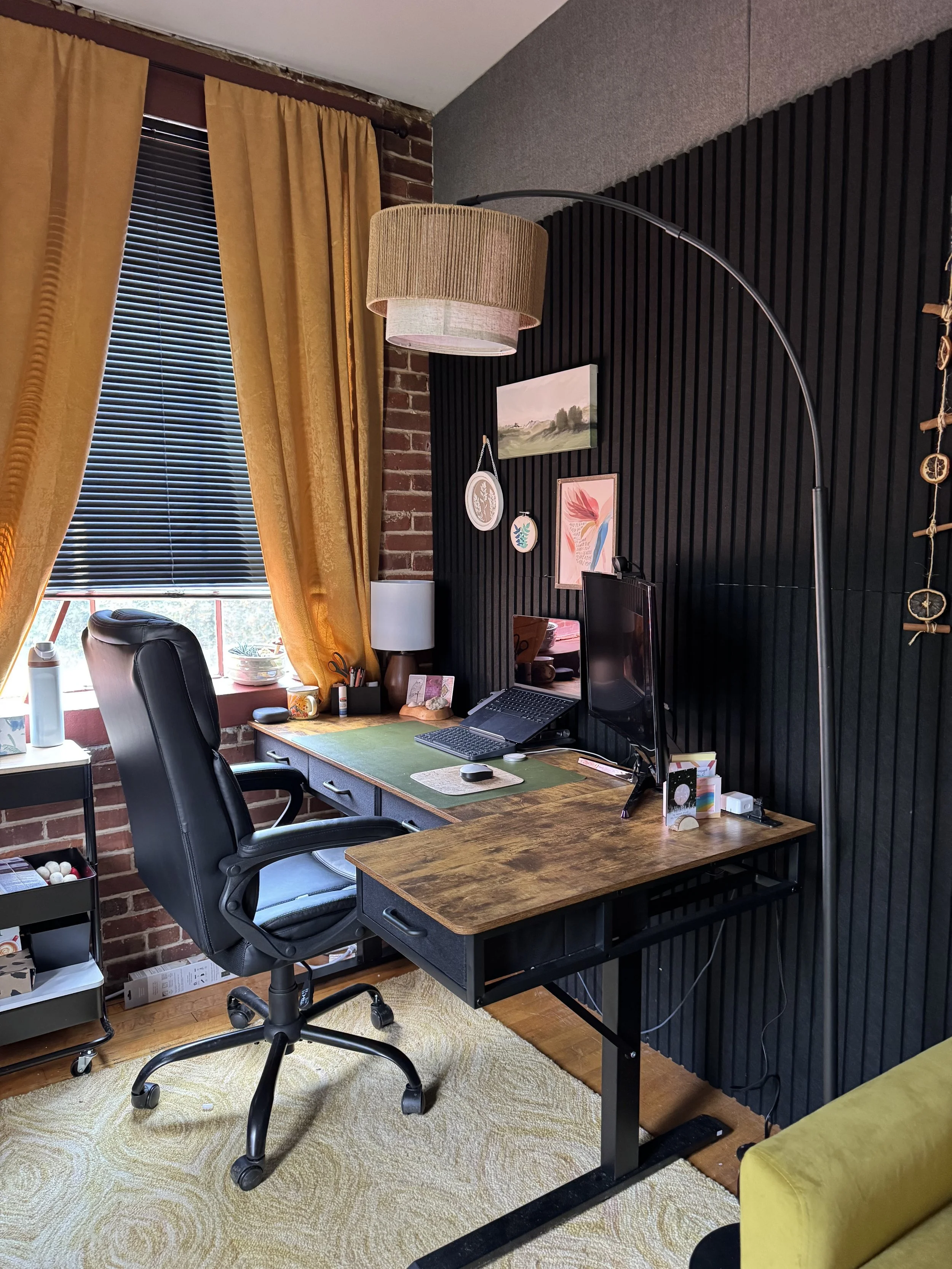
A space designed to feel steady.
Seamless virtual care
Secure telehealth appointments are available for patients who prefer or need remote care. Whether online or in person, the goal is the same: thoughtful psychiatric care in a setting that supports privacy, clarity, and connection.

A space that is created to support a sense of safety
The office is designed to feel warm, private, and grounding — a space where clinical care can feel less rushed, less sterile, and more human.
FAQS
Still have a few questions?
-
I provide brief supportive, psychoeducational, and skills-based interventions as part of psychiatric care, but I do not offer weekly therapy as a stand-alone service.
Many patients also work with a therapist separately. When helpful, I can coordinate care with therapists, primary care providers, or other members of your support team.
-
Yes. Medication management is a core part of the practice when clinically appropriate. Medication decisions are collaborative and individualized, with attention to benefits, risks, side effects, alternatives, and your lived experience of your own body.
Medication can be an important tool, but it is not the whole of care. We will consider symptoms in the context of sleep, stress, trauma, substance use, medical factors, identity, environment, and overall functioning.
-
Yes. ADHD and autism concerns can be explored as part of a comprehensive psychiatric assessment. I use a neurodivergence-affirming approach that considers masking, burnout, executive functioning, sensory experience, trauma, mood, anxiety, substance use, and lifelong patterns of feeling misunderstood.
I do not offer high-volume ADHD medication management or stimulant-only care. ADHD is assessed and treated within the larger context of your mental health and life.
-
Yes. I provide nonjudgmental, recovery- and harm reduction-informed psychiatric care for people navigating substance use, recovery, ambivalence, relapse risk, shame, or the ways substances may have helped them survive.
Some needs may require a higher level of care or additional substance use treatment. When that is the case, recommendations will be discussed clearly and respectfully.
-
New patients can request an appointment through the secure client portal. After requesting an appointment, you will be asked to complete intake paperwork before the visit.
Intake paperwork helps me understand your history, current concerns, insurance or payment information, medication history, and goals for care. Appointments may need to be rescheduled if required forms are not completed in advance.

Begin with care that sees the whole picture.
Psychiatric care can be thoughtful, affirming, and grounded in the reality of your life.